,

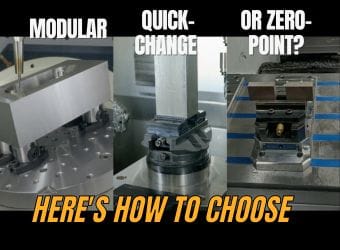
Modular, Quick-Change, and Zero-Point: What Each Approach Does—and When It Actually Makes Sense to Use It 

27 Jan

Workholding decisions shape more than setup time. They define how stable a process is, how parts move through the shop, and whether repeatability is designed in or constantly corrected.  Modular, quick-change, and zero-point systems are often discussed together. But they solve different problems. Confusion usually starts when one approach is used to fix a problem it wasn’t designed for.  Modular…
read more
, ,

What Is a Reference System and Why It Changes How Parts Move Between Machines: CNC → EDM → Wire EDM Without Realignment 

26 Jan

In many shops, every machine treats the part as if it were new. Each operation begins by re-establishing alignment, finding zero, and redefining position. That repetition feels normal, but it quietly introduces variation.  A reference system exists to prevent that. It allows a part to move between machines while preserving the same geometric intent. The…

read more
,

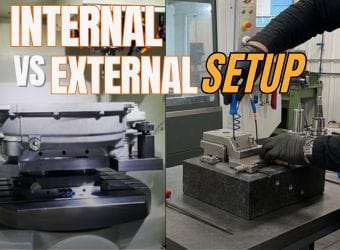
Setup Time Reduction: What You Really Gain When You Move from Internal Adjustments to External Preparation

23 Jan

In many CNC shops, setup time is treated as something to be minimized at the machine. The focus is often on doing the setup faster so production can begin. What rarely gets questioned is where that setup work is actually happening.  Most setups include two very different types of work. Some tasks can only be done when the machine is stopped.…

read more

Why CNC Scrap Often Gets Blamed on the Wrong Thing 

21 Jan

When scrap appears in CNC machining, the first reaction is usually immediate. The tool gets blamed, the program gets adjusted, or the operator gets questioned. These are the most visible parts of the process.  Often, the correction seems to work. A parameter change removes the scrap, production resumes, and the issue is considered solved.  Until…

read more

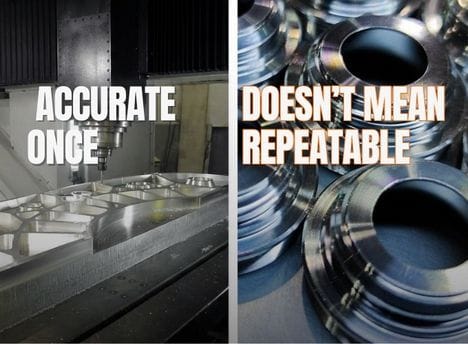
Accurate Once Doesn't Mean Repeatable: Why CNC Setups Fail Over Time

21 Jan

In CNC machining, achieving tolerance once is often mistaken for proof of a good process. The part measures correctly, the setup looks clean, and production moves forward with confidence. At first glance, nothing appears unstable or worth revisiting.  But here’s the problem: accuracy at a single moment doesn’t equal repeatability over time. Many setup-related issues don’t fail during the first run. They fail quietly, after…

read more

CNC Setups That Look Fine but Create Problems Later 

20 Jan

In CNC machining, many setup-related issues don’t come from obviously bad practices. They come from setups that look acceptable, run parts, and pass inspection at first glance. Because nothing fails immediately, these setups are rarely questioned.  The machine cuts smoothly, the first part measures within tolerance, and production moves on. But over time, small inconsistencies start to appear.  Dimensions drift, surface finish changes,…

read more